
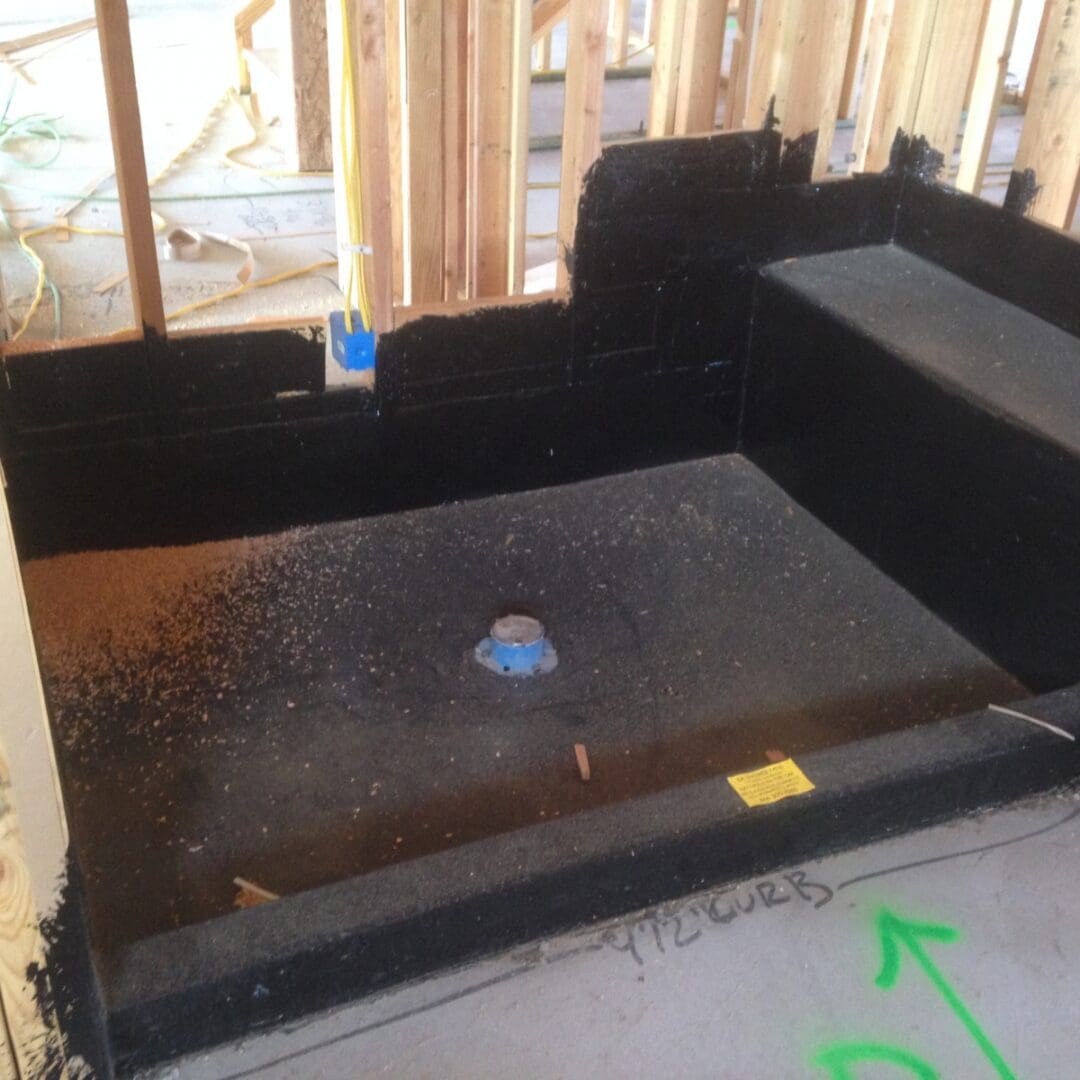
What is a hot mopped shower pan? The Complete Beginners Guide
The hot mopped shower pan is one of the various methods that are used in the tile and stone industry as part of the process of water proofing your shower.
It is a code requirement in all shower installations that they have a waterproof shower pan. There are basically two category types of shower pans that can be used, a prefabricated solid surface waterproof base, or the “built-up” multi-layer system in which “the hot mop” is one of the layers.
Examples of prefabricated shower pans are fiberglass, acrylic and Corian or Corain type products. These types come in many standard shower pan sizes and some companies offer custom sizes that are made to a client’s request.
The “built-up” system uses an on site approach and all work is done by the technicians at the location of the project. This system is widely used by contractors and designers as it gives more flexibility in the layout of and the materials that can be used for the final look of the shower.
The shower pan is the work horse of your shower. All the water from your shower head, rain head, body sprayer, hand held, that hits your body, the wall, the glass enclosure, the bench, eventually reaches the shower floor,aka the “finished shower pan”, and then off to and down the drain!
Well almost all the water reaches the drain! Tile and stones are not waterproof nor is the grout or caulking that are used. Water has a way of finding even the smallest gap or void to work its way into and escape from heading down the drain. Hence the purpose of the true hero of giving you protection from the damage of un-channeled water can cause it is the shower pan you don’t see, the one that is under the finished surface of your shower floor, aka the shower pan liner!
Make no mistake all shower pan waterproofing methods that are used, be it sheet goods, roll on coatings, and yes hot mopping are all, before, during, and after application, considered shower pan liners, at least that is how I was taught, and I will keep on using that terminology until put out to pasture!
All “shower pan liners” have more than a few things in common to conform to building codes. Also different systems have their own protocols about how they are to be applied.
We will focus 1st on what the requirements are for most shower pan liners and expand on the advantage of the hot mop system itself.
All liners must have a solid base to adhere to or lay upon. Concrete, plywood, and mortar beds are the most often used.
All liners shall have a slope to the drain of no less than a ¼” per foot and no greater than ½” per foot.
Waterproofing shall extend a minimum of 2” above the finished height or the curb/ threshold and continue at that height around the entire perimeter of the shower receptor. Always check local codes before installing! Especially if you are planning to do a curbless shower! These have a different criteria that needs to be met and varies from city to city and county to county!
Now we come to drains…products have been on the market that changed the standard that was commonly used.
Curb/thresholds must be a minimum of 2” higher than the top of the drain.
This can be interrupted in two ways…rough height or finished height of curb. Rule of thumb is that after the liner is installed there should be enough height from the top of the curb/threshold to the liners interior floor slope to accommodate mortar bed thickness, tile thickness, AKA finished floor height plus a minimum of ½” for retention. Low curb/thresholds are very popular but many a problem of water intrusion has been caused by underestimating the correct height of the curb/threshold area needed in the rough stage of framing to prevent such issues.
More on drains…two major types are commonly used. Two piece flange style clamping ring, in which the liner is applied over the sub-drain AKA the bottom flange which is attached to the plumbing system, and the clamping ring AKA the top flange is mechanically attached with either bolts or screws determined by which manufacturer built the drain. These type drains are made of many different materials ranging from cast iron, different types of plastics, copper, and others. These were the industry standard for many decades.
With the advent of fiber fleeced backed waterproofing coming to the market they engineered their own drain design to work with their products. It eliminated the top flange clamping ring and use adhesive to apply to a fabric belt built into their drain.
NOTE: Each system must use the drain that is compatible with the waterproof liner they have chosen…they are not interchangeable!
Advantages of using the Hot Mop method for your shower pan liner
- Any size, any shape, any angle shower pan can be done! With no return trips!
- Drain placement can be almost anywhere in the pan!
- Start to finish in a matter of hours!
- Ready for the water test in as little as 4 hours after completion!
- Been in use since the early 50’s as the go to method in California!
- Low-smell hot asphalt minimizes “tar odor” in most cases after 2 hours it is no longer noticeable.
- Competitive price point with all other waterproofing methods!
- Last minute changes to your shower? No problem!
- Time proven product with outstanding durability!
In conclusion no matter what method of waterproofing you choose to use on your project, do your own diligence! Call a few contractors, ask questions and have their answers explained! Take the time to know the series of events that need to happen to keep your project on track!